This past spring break, of the first year of my college education, I decided to go to Washington. Being the home of Seattle, Twin Peaks and two of my closest friends from high school, it seemed like the best choice if I wasn't going to return home.
I landed in Seattle on Saturday afternoon, and met my mom at the airport. We found our way to a very quaint, cozy airbnb, perfectly embodying what I love about this region. The walls and ceiling were all pushing in gently, like a hug. The airbnb came equipped with plenty of food, including a bag of what my mom said were "really good beans". They did taste good, I just didn't know what to compare them to.
Seattle really knows how to recycle, better than possibly any city I've stayed in (though I have yet to live the full Portland experience, and I hear they're pretty good). It's so easy to separate everything out if you just put in a few seconds of your day every time you throw something out.
We saw A Bread Factory, a small budget, long runtime dramedy about a small budget, high-impact educational theater in a small size, big-hearted New England town. It was in two parts, around four hours total, and we watched both parts back-to-back, but it didn't feel like four hours. That's a rare experience. It was one of those stories that covers a number of people's journeys without feeling the need to tie it all together or answer every question. I respect that, and it says something great about the quality of the writing and characters. They're compelling enough without one concise plot. The film was full of quirks, but didn't rely on them, instead falling back on the leads, played wonderfully by Tyne Daly and Elisabeth Henry (Henry was a local theater actress in a small town near the film's location). They were two gentle but strong old women trying to protect their theater from the forces of gentrification, and around their story, the world of the film was built. Highly recommended.
The day after seeing A Bread Factory, we took a drive out to Snoqualmie and North Bend, to be Twin Peaks tourists. These towns, however, turned out to be much less Twin Peaks and much more "Santa Clarita with a Washington texture pack". The land surrounding these towns, however, was truly incredible. The dense forest of pointy douglas firs stretched out along hills and showed no signs of human civilization at many points. It was a daunting sight, a completely unmarked wilderness, and it gave me a bit of insight into how Lewis and Clark must have felt first seeing this land. Of course it was very different back then, and I was only a short drive from Seattle, but certain areas of forest seemed endless, as if they were untouched. These pockets of infinity once covered the whole country. What a thought. What a feeling. A feeling of mystery, danger and complete freedom. This was the land that shaped the existence of thousands of people pre-European discovery.
At Snoqualmie Falls, a sign described a high level of spiritual importance of the falls to certain tribes, which makes perfect sense. Imagine being in an age where places could still be discovered, and how incredible it would be to discover a waterfall. Nobody told you something so cool existed, and suddenly, there it is. This was a time when there was still abundant mystery surrounding the natural world, when there wasn't a commonly available article about every plant, animal and ecosystem. Today, places of mystery are few and far between, and often not traversable by common people. The bottom of the ocean and the moon, for example. This northwest area evokes a feeling of mystery as well as a powerful melancholy, perhaps why it was such a perfect setting for Twin Peaks, a show that couldn't exist alienated from its setting. The mystery and melancholy are both incredibly alluring, at least to me, and certainly to all the other devoted Twin Peaks fans.
I remember a board game I played often as a child. It was called "Bigfoot" and it was about bigfoot, if you were wondering. The object of the game was to escape a plastic figurine of the famous cryptid that would be operated by any opponent who drew a bigfoot card, and it would move toward you with ominous silence. It would land on you, and your opponent would press it down like a stamp, and out of its feet would come a little plastic disk, either blank, or with a footprint on it. If there was a footprint, you were finished. So you would run around the board trying to be as far away as possible. The setting of the game was some little sawmill town somewhere in the north, probably Canada or Alaska, and the board had some incredible scenery on it. This may have been my first exposure to this environment, and it certainly left an impression. As you can see, I can still write ad nauseam about it.
After the brief stop in Twin Peaks, we made an impulsive decision to drive four hours to surprise my sister, Isabel, in Walla Walla. Well, she was surprised when we awkwardly walked up to her front door, but maybe the drive was too long. We went to Walmart with her because there's not much else to do in a college town on a Monday night. The Walmart was too big. I really mean it, way too big. It was basically in an aircraft hangar, but with a flat ceiling and lots of pillars to keep it from caving in. Isabel was unable to find tofu, because the grocery area of this Walmart was perhaps as big as any normal grocery store, but much less well organized, and it bled out into other sections of the store.
The next day, we all had breakfast in town, and then my mom and I drove all the way back to Seattle. Still, the scenery is stunning.
After returning, the day was pretty uneventful, but that's ok. Sometimes it's fun to spend a day doing nothing, just enjoying how it feels to be away from everything.
The next day I was off to Bellingham, visiting two friends from high school. The town is nice, but definitely has seen better days. There's a big unused port area, so it's clear there's a lost industry. The city is still beautiful, though. Buried deep in the woods, but open to a gorgeous bay on one side. The Western Washington campus, where my friends are, fits nicely along the hill it's built on, though perhaps some of the buildings are a bit too big. Overall, it's a very cozy place, with lots of rain and clouds, something that I love. My friends are fitting in, but not one-hundred percent happy with it, which is a shame, but also gives me a helpful reality check: just because a place seems great at first, does not mean you will be happy living there.
The past few months have brought incredible change to my character and appearance, so this visit with my friends was possibly the most jarring. I'm really starting to see how we're different, and it does make me wish I could return to the simple days of senior year of high school. It was a happy time for me, but that's also a bad thing because remembering something fondly can make you unhappy with a pretty good status quo. Southern California is certainly hot, it doesn't rain enough, and the community at CalArts isn't as chill as it seems up at Western Washington, but there are so many opportunities and lots of great energy that I may be taking for granted after seeing the alternative. Still, this trip was a good moment for me to re-center on the things I love up north. Seattle. Twin Peaks. Two of my closest friends from high school. It also helped me re-center on the person I was a year ago, the person my friends remember, and certain qualities, aspirations, and passions of that person that I'd like to re-adopt.
I landed in Seattle on Saturday afternoon, and met my mom at the airport. We found our way to a very quaint, cozy airbnb, perfectly embodying what I love about this region. The walls and ceiling were all pushing in gently, like a hug. The airbnb came equipped with plenty of food, including a bag of what my mom said were "really good beans". They did taste good, I just didn't know what to compare them to.
Seattle really knows how to recycle, better than possibly any city I've stayed in (though I have yet to live the full Portland experience, and I hear they're pretty good). It's so easy to separate everything out if you just put in a few seconds of your day every time you throw something out.
We saw A Bread Factory, a small budget, long runtime dramedy about a small budget, high-impact educational theater in a small size, big-hearted New England town. It was in two parts, around four hours total, and we watched both parts back-to-back, but it didn't feel like four hours. That's a rare experience. It was one of those stories that covers a number of people's journeys without feeling the need to tie it all together or answer every question. I respect that, and it says something great about the quality of the writing and characters. They're compelling enough without one concise plot. The film was full of quirks, but didn't rely on them, instead falling back on the leads, played wonderfully by Tyne Daly and Elisabeth Henry (Henry was a local theater actress in a small town near the film's location). They were two gentle but strong old women trying to protect their theater from the forces of gentrification, and around their story, the world of the film was built. Highly recommended.
 |
| Tyne Daly and Elisabeth Henry with some protest signs that I don't fully understand. |
The day after seeing A Bread Factory, we took a drive out to Snoqualmie and North Bend, to be Twin Peaks tourists. These towns, however, turned out to be much less Twin Peaks and much more "Santa Clarita with a Washington texture pack". The land surrounding these towns, however, was truly incredible. The dense forest of pointy douglas firs stretched out along hills and showed no signs of human civilization at many points. It was a daunting sight, a completely unmarked wilderness, and it gave me a bit of insight into how Lewis and Clark must have felt first seeing this land. Of course it was very different back then, and I was only a short drive from Seattle, but certain areas of forest seemed endless, as if they were untouched. These pockets of infinity once covered the whole country. What a thought. What a feeling. A feeling of mystery, danger and complete freedom. This was the land that shaped the existence of thousands of people pre-European discovery.
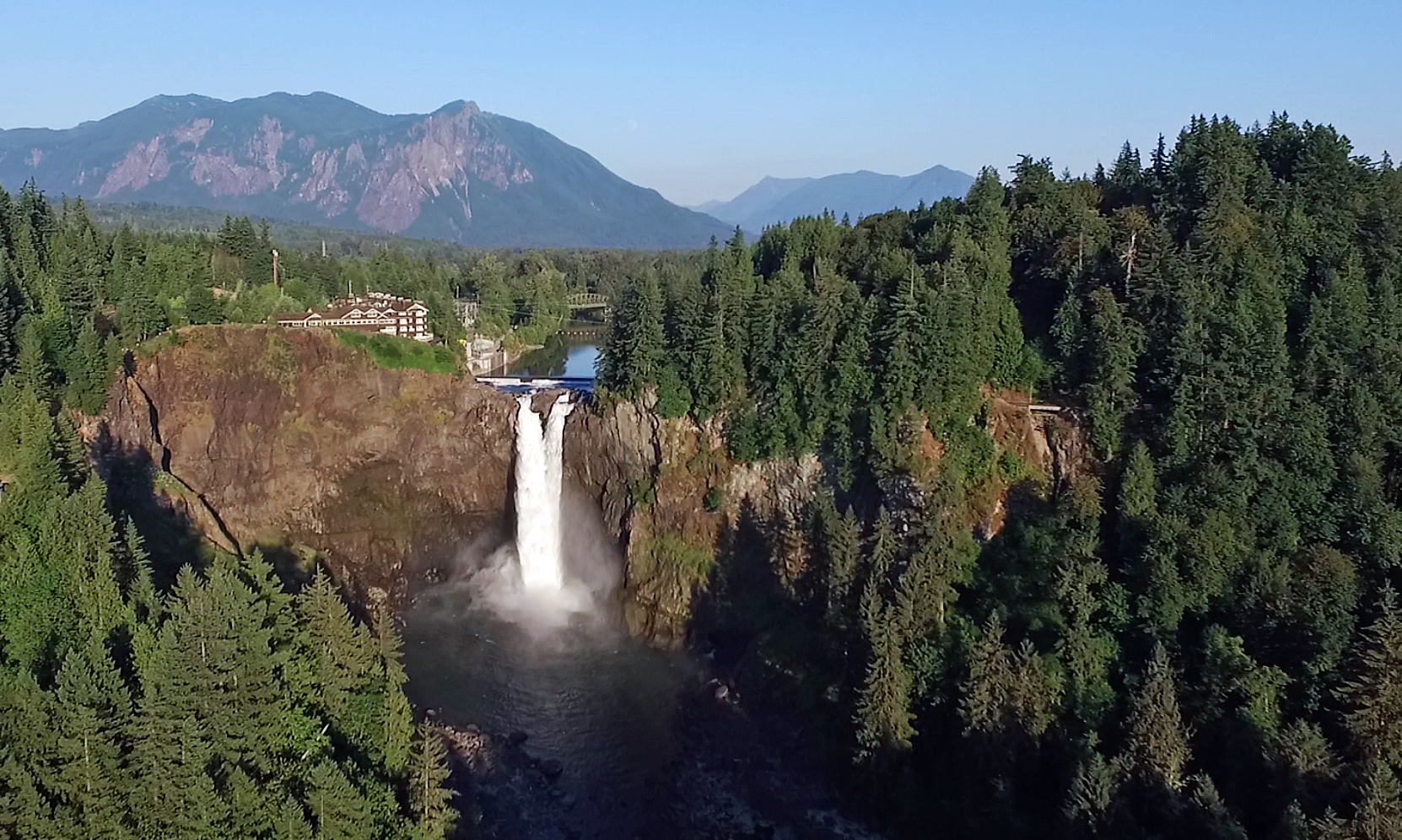 |
| A picture can't really capture it, but it's better than nothing |
At Snoqualmie Falls, a sign described a high level of spiritual importance of the falls to certain tribes, which makes perfect sense. Imagine being in an age where places could still be discovered, and how incredible it would be to discover a waterfall. Nobody told you something so cool existed, and suddenly, there it is. This was a time when there was still abundant mystery surrounding the natural world, when there wasn't a commonly available article about every plant, animal and ecosystem. Today, places of mystery are few and far between, and often not traversable by common people. The bottom of the ocean and the moon, for example. This northwest area evokes a feeling of mystery as well as a powerful melancholy, perhaps why it was such a perfect setting for Twin Peaks, a show that couldn't exist alienated from its setting. The mystery and melancholy are both incredibly alluring, at least to me, and certainly to all the other devoted Twin Peaks fans.
 |
| The snowy paradise of Bigfoot |
I remember a board game I played often as a child. It was called "Bigfoot" and it was about bigfoot, if you were wondering. The object of the game was to escape a plastic figurine of the famous cryptid that would be operated by any opponent who drew a bigfoot card, and it would move toward you with ominous silence. It would land on you, and your opponent would press it down like a stamp, and out of its feet would come a little plastic disk, either blank, or with a footprint on it. If there was a footprint, you were finished. So you would run around the board trying to be as far away as possible. The setting of the game was some little sawmill town somewhere in the north, probably Canada or Alaska, and the board had some incredible scenery on it. This may have been my first exposure to this environment, and it certainly left an impression. As you can see, I can still write ad nauseam about it.
 |
| Is this not terrifying? |
After the brief stop in Twin Peaks, we made an impulsive decision to drive four hours to surprise my sister, Isabel, in Walla Walla. Well, she was surprised when we awkwardly walked up to her front door, but maybe the drive was too long. We went to Walmart with her because there's not much else to do in a college town on a Monday night. The Walmart was too big. I really mean it, way too big. It was basically in an aircraft hangar, but with a flat ceiling and lots of pillars to keep it from caving in. Isabel was unable to find tofu, because the grocery area of this Walmart was perhaps as big as any normal grocery store, but much less well organized, and it bled out into other sections of the store.
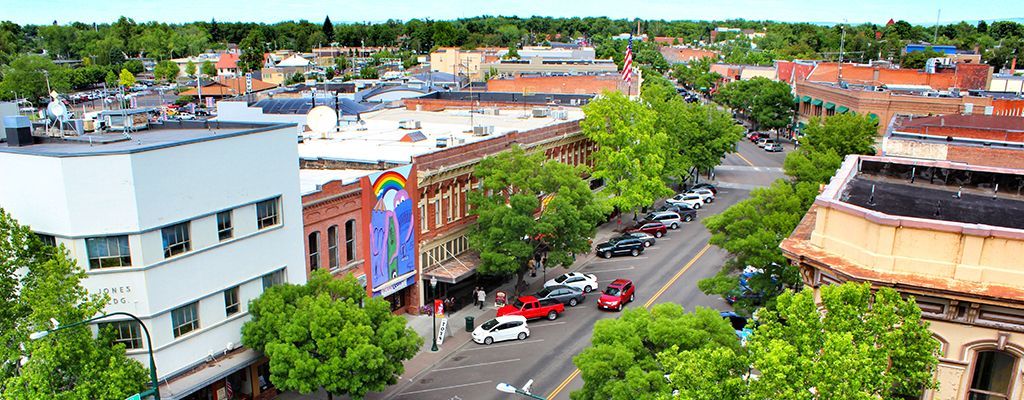 |
| Downtown Walla Walla |
The next day, we all had breakfast in town, and then my mom and I drove all the way back to Seattle. Still, the scenery is stunning.
After returning, the day was pretty uneventful, but that's ok. Sometimes it's fun to spend a day doing nothing, just enjoying how it feels to be away from everything.
The next day I was off to Bellingham, visiting two friends from high school. The town is nice, but definitely has seen better days. There's a big unused port area, so it's clear there's a lost industry. The city is still beautiful, though. Buried deep in the woods, but open to a gorgeous bay on one side. The Western Washington campus, where my friends are, fits nicely along the hill it's built on, though perhaps some of the buildings are a bit too big. Overall, it's a very cozy place, with lots of rain and clouds, something that I love. My friends are fitting in, but not one-hundred percent happy with it, which is a shame, but also gives me a helpful reality check: just because a place seems great at first, does not mean you will be happy living there.
 |
| I used to keep my hair a lot shorter |
The past few months have brought incredible change to my character and appearance, so this visit with my friends was possibly the most jarring. I'm really starting to see how we're different, and it does make me wish I could return to the simple days of senior year of high school. It was a happy time for me, but that's also a bad thing because remembering something fondly can make you unhappy with a pretty good status quo. Southern California is certainly hot, it doesn't rain enough, and the community at CalArts isn't as chill as it seems up at Western Washington, but there are so many opportunities and lots of great energy that I may be taking for granted after seeing the alternative. Still, this trip was a good moment for me to re-center on the things I love up north. Seattle. Twin Peaks. Two of my closest friends from high school. It also helped me re-center on the person I was a year ago, the person my friends remember, and certain qualities, aspirations, and passions of that person that I'd like to re-adopt.
Comments
Post a Comment